
For Andrew Rasmussen, professor of literature and rhetoric in Eastern’s English department, the experience of reading “Paradise Lost,” is revelatory to the point of conversion.
Rasmussen originally encountered the poetry of John Milton while in undergrad, via his famous epic “Paradise Lost,”. “It wasn’t for a class,” he said. “Shows you what kind of nerd I am.” “Paradise Lost,” retells the story of the fall, beginning with Satan down in Hell. Reading “Paradise Lost,” was one of the main influences on Rasmussen to become a Christian.
“Everyone likes [Milton’s] portrayal of Satan, the way he makes him look cool,” Rasmussen said. But what struck Rasmussen as he first read the poem was the response Milton’s poem made to Satan. The “vision of grace was so expansive and wide. Theologically, it was a whole new vision of the world.” Moreover, Rasmussen was struck by “the language” of the poem: “I remember telling my friend: I feel like I’m reading molten gold.”
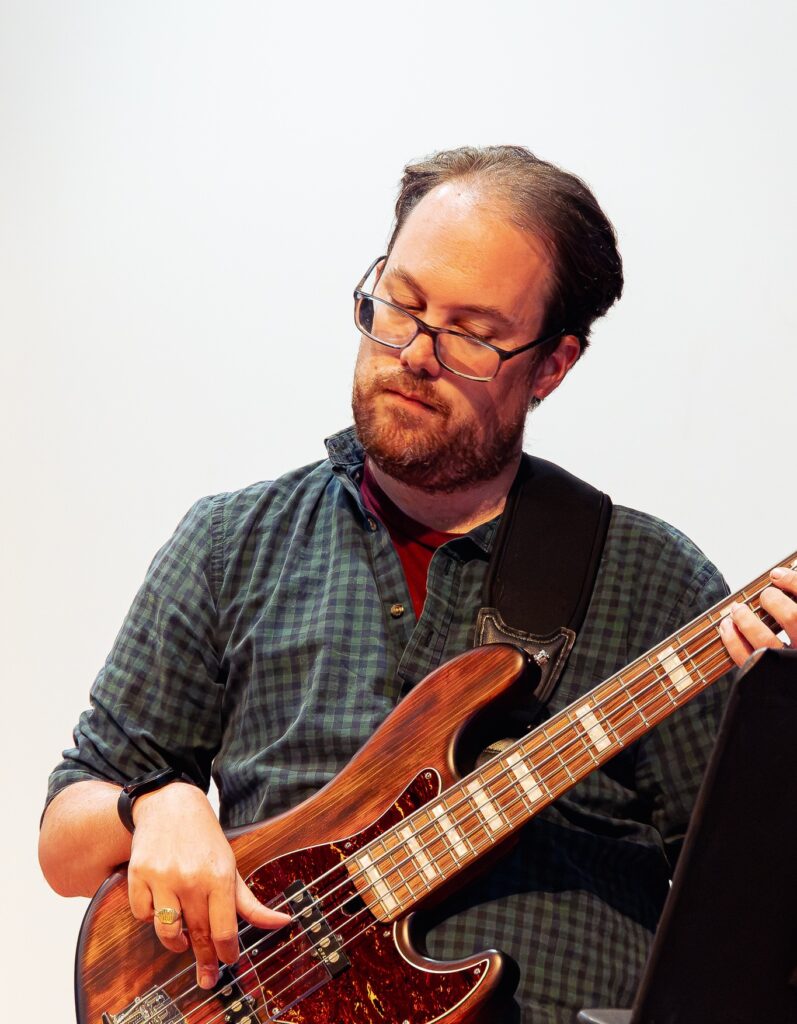
Although Rasmussen loved Milton from the beginning, it took him a while to decide to study Milton officially. He was originally “a jazz performance major,” and even after switching majors, he was hesitant to turn to English.
“I had a professor in undergrad,” he explained, “who said: you should teach English. I hated school, thought I would never be a teacher … but he was right … I’d always liked reading literature, but it never occurred to me that there was more value to it.” Now, however, Rasmussen feels that reading literature “changes how I interact with the world.”
Eventually, Rasmussen would go on to study Milton in his Ph.D. program at Baylor, writing his dissertation on the archangel Raphael and classical rhetoric. “I like Milton the teacher. I like Milton the Christian,” Rasmussen said. Rasmussen disagrees with “critics [who] want him [Milton] to be of Satan’s party. I don’t think that’s true. I think he’s writing faithfully, as a Christian, as a teacher.”
Rasmussen teaches a class on Milton called Milton and the 17th century. The class begins with “Paradise Lost,” “working through the major questions and ideas” of the poem and “talking about critics over the centuries.” Then, the class goes back in time to Milton’s earlier poetic works and essays, looking as well at the context of his writing and Milton’s personal and political life. Milton had thoughts on everything from Cromwell to censorship to divorce. The class finally reads Milton’s two other epic poems: “Samson Agonistes” and the oft neglected sequel to “Paradise Lost,”: “Paradise Regained,”.
Milton, and especially “Paradise Lost,” has had a huge impact on pop culture over the years: “At one point, “Paradise Lost,” was apparently cited in more published sermons than the Bible,” Rasmussen said. More recently, everything from Greta Gerwig’s “Barbie,” to episodes of “Star Trek,” have referenced or been influenced by Milton.
“If you’re a Christian, Milton has influenced your theology. If you’re an American, Milton has influenced your politics,” Rasmussen said. “He’s also really, really fun.” Midway through “Paradise Lost”, “Satan invents canons and then the angels throw mountains at him.”
“So that’s my sales pitch,” Rasmussen said.
