
Eastern University has always been an institution that values fine art. Pieces find their homes in every building on campus for admirers to see. This fall, there has been a wonderful addition to the body of work that lives and breathes on this campus.
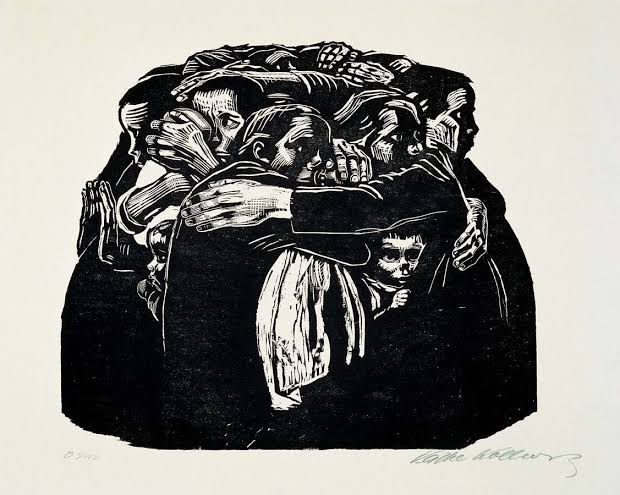
“Was God Dead?” is a contemplative collection of German expressionist works that now belong in the Merriman Gallery in Templeton Hall. Many artists are featured, but one by the name of Käthe Kollwitz stands out.
Kollwitz was born July 8, 1867, and grew up in a middle-class family. She studied painting in Berlin for two years, but had a growing fascination with woodcuts, etchings, lithographs and drawings. She gravitated toward these mediums in 1891 following her marriage to Karl Kollwitz, who served as a doctor in an impoverished part of Berlin.
During this time, she saw the devastation of war and loss firsthand. She became an advocate fighting against wartime destruction by depicting human elements of despair. The subject matter of her pieces shed light on those brushed up in conflict, with dead bodies and mourning mothers at the center of it all. Her first famous piece was recognized in the late 19th century, called “The Weavers.”
Following the launch of her career, she continued to act as a vehicle for social change. She widely distributed her prints in magazines and monthly subscriptions, all while committing herself to a position of pacifism.
Kollwitz encountered the reality of her work following the death of her own son at the start of World War I. Following this, she worked in a cafeteria that fed soldiers and impoverished children. She was not separate from the conflicts that she depicted, because she actively engaged herself with the population she served.
She continued her artistic endeavors and utilized her personal experience with loss to fuel a naturalist depiction of raw human emotion. Kollwitz injected the tangible truth of mourning into spaces where despair was downplayed and left an impression through her work that remains a force to be reckoned with.
Toward the end of her life, Kollwitz and her husband became victims of poverty themselves. Despite Kollwitz’s monumental achievements in the art world throughout her life, she died April 22, 1945, just before the end of World War II. It is a privilege to have such an influential artist at our fingertips in a free, public gallery right here on campus!
