
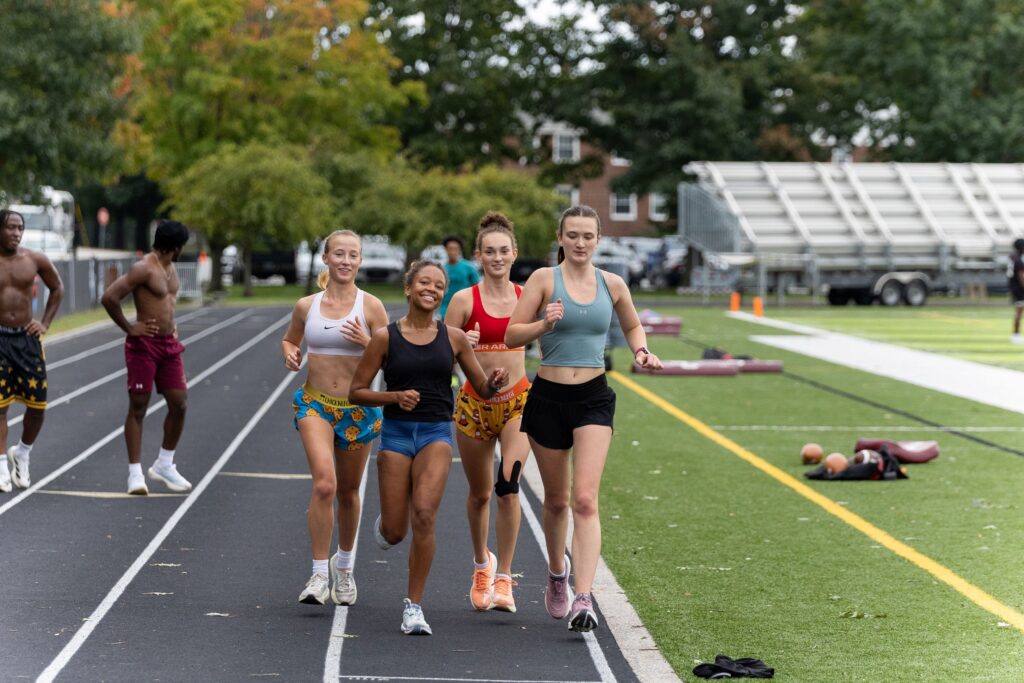
It is common knowledge that many students decide to enter college to play their favorite sport. Some even earn scholarships, awards and other tokens of recognition for the work they put into their games.
Most college athletes receive decent amounts of resources, support and appreciation during their time in their sport. However, their teams can quickly become secluded or even elite groups that train and play together constantly. Their members are all long-term players who likely committed to their area of sport at a young age, and they tend to mingle mainly amongst themselves.
However, for students who have not spent the greater portion of their lives taking part in this sort of training, it can be nearly impossible to get involved in any sort of athletic activities on campus. They do not have the early life dedication, technical skills or developed physical strength that standard athletes have. This is where intramural sports come in.
The idea of intramural sports is to allow Eastern’s non-athletes to get outside and be able to play against one another without maintaining the strict lifestyle of a college athlete. Rather than a career, these sports are simply for fun, which is something college students often need as a break from their everyday activities.
Along with a break from hard work, getting involved in a sport or group allows students to meet and bond over shared goals. This gets students started on developing the necessary social skills and relationships required to survive on a college campus.
Staci-Jo Palek, Eastern’s assistant director of Student Engagement and Transition Programs, gave insight in an interview as to what these new games will provide Eastern’s campus community. “Intramurals allow students to play different sports in a relaxed, low-pressure environment while meeting new people and getting involved on campus,” she said. “Intramurals are all about having fun, getting active, and enjoying some friendly competition with your fellow students.”
Palek shared that she has years of past experience in engaging with and managing intramural sports programs in college settings. She gained experience at Samford University in Alabama, a Division I school. “During my time there, I experienced and learned about all different types of sports and what goes into running a successful intramural program,” she said.
She then went on to a Division III school, where she was once again involved in their intramural program. “During that time, I learned something pretty simple: students just want to get out there and run around!” she said.
Clearly, Eastern’s intramural program is in good hands.
Palek noted that instead of bringing out every possible game right away, the department will start with something small and grow from there. “Instead of trying to offer everything at once, we will introduce one tournament each month and see where it takes us,” she said.
Students are encouraged to reach out and get involved in Eastern’s intramural sports program at any time, as they will be beginning with a 7v7 kickball tournament in October.
