
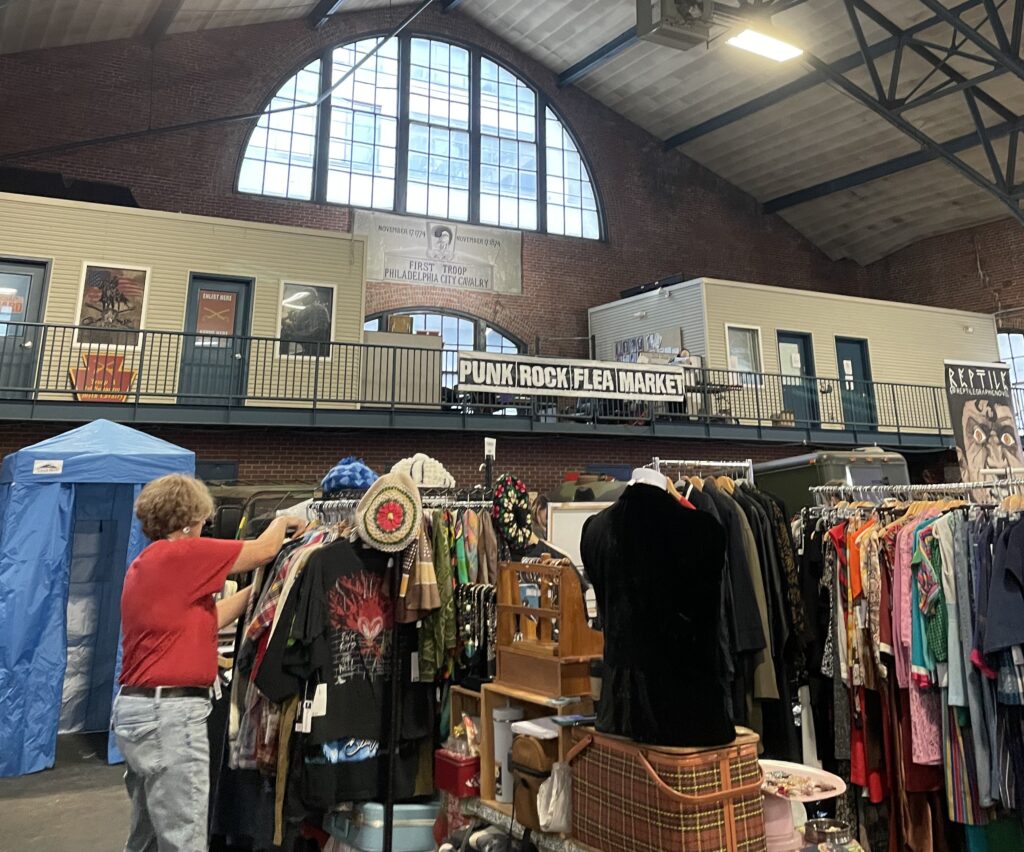
Philadelphia, which is only 30 minutes from Eastern, is a major hub for art, music and cultural events of all kinds. While some may visit for its prestigious art museums or for a concert at the Fillmore, Philadelphia – and Pennsylvania – is incredibly culturally diverse. One recurring event in Philadelphia that celebrates small local artists and bands with irrefutable creative spirit is the Punk Rock Flea Market, held just two weeks ago at the 23rd Street Armory.
Flea markets are a relatively common way for smaller businesses to come together and collaborate on creating one larger, cohesive event, oftentimes with music, food and other activities for people to enjoy. They can be held absolutely anywhere with enough space and people and can be an excellent way for creators to sell their products and creations, making it a great way for people to buy handmade items instead of pieces that are mass-produced.
An event that has gone on for over seven years, the Punk Rock Flea Market – as the name suggests – hosts creators, vendors, and artists that sell alternative or punk pieces, making it slightly more specific than the average market. The range of aesthetics and items was broad. Vendors sold records, books, ceramics, jewelry, clothes, patches, candles, paintings, coffee, wall prints and many more interesting items, all falling into a central category: punk.
Punk is a movement that pairs raw, aggressive music with alternative ideologies, making it a genre, an aesthetic, a lifestyle and a politically oriented identity. In an article for BYU, Abish Fatani writes, “While punk today is associated with aesthetics of baggy clothes and loud music in the mainstream, in its foundation it is a political movement surrounding the leftist tenets of anti-establishment, anti-capitalism, feminism, and individual freedom.”
Punk music primarily evolved from rock in England and the United States in the 1970s through the 1990s, with some of its most iconic bands being Ramones, The Clash, Bad Brains, Death, Los Saicos, The Misfits, Operation Ivy, Anti-Flag, Death, Reagan Youth, Against Me!, Rancid and Minor Threat. Punk has since developed many subgenres, including post-punk, goth, Midwest emo, pop punk, hardcore, Riot Grrl and even shoegaze and indie.
Philadelphia, one of the major urban cities of the country, naturally fostered a thriving punk rock scene in the ‘70s through to the ‘80s. There were many small record companies and tiny hole-in-the-wall venues – even churches and hoagie shops – that helped develop close-knit community and ties that still exist to this day. Some bands from Philadelphia specifically are Circa Survive, Cayetana, The Wonder Years, Modern Baseball and Ruin.
One of the biggest hallmarks of punk is DIY, which stands for do-it-yourself. Punk clothes, bands and art are all usually handmade, embracing individuality and imperfection. Hand-painted patches sewed onto thrifted jackets, grommets on pants and belts, collages and zines and second-hand musical instruments all make punk very accessible to anyone who wants to engage with the community.
Another major reason for this DIY aesthetic is because punk has always focused on fighting for the rights of the working class, which is expressed in its fashion and culture. For example, the boot brand Doc Martens has gone from being popular among British factory workers in the ‘60s to being worn by punks to now being a popular shoe that almost everyone has a pair of. This is also an example of how punk fashion has influenced culture.
One of the most iconic fashion designers of our time, Vivienne Westwood, was deeply influenced by the punk subculture and vice versa, and an integral part of her career was designing clothes for the punk band the Sex Pistols, blending high-end fashion with DIY and working-class styles.
This flea market event was very on-brand for punk specifically in regard to this sense of creativity. This event has always been DIY to its core. Upon entering the venue space, the place was bustling, the music was blaring over the sound of heavy rain outside and the whole place felt vibrant and alive. Even though the ‘70s and ‘80s are far behind us, the punk rock scene is still alive and well in Philadelphia, and newer events still engage with punk’s rebelliousness, creativity and DIY spirit.
