
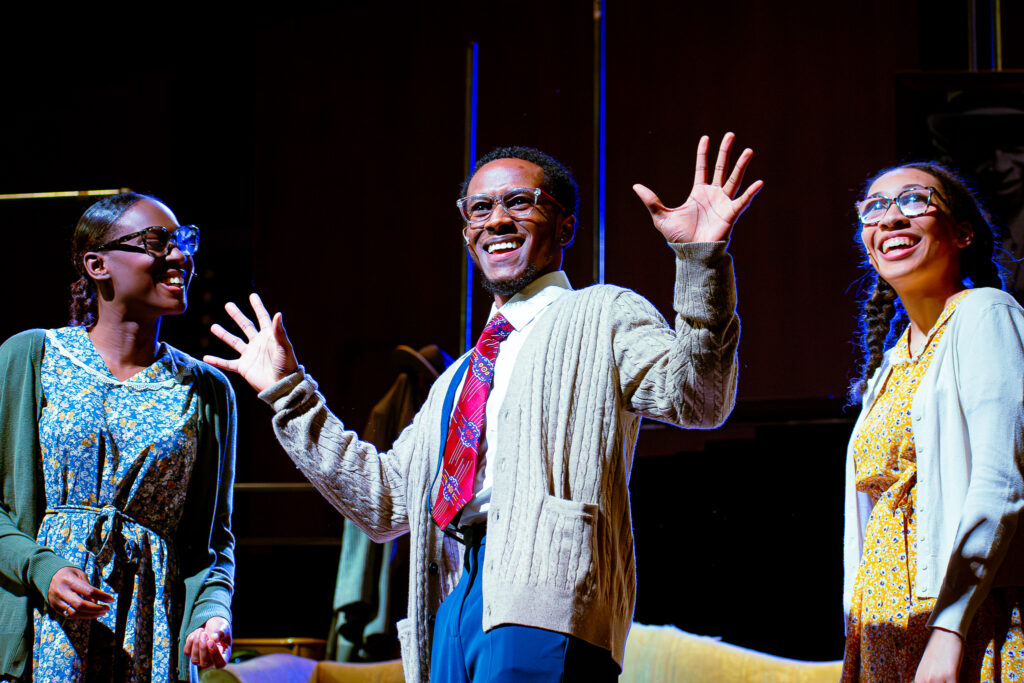
This spring, from March 26-March 29, Eastern University’s theatre department put on a production of the play “Crumbs from the Table of Joy” by Lynn Nottage. The play follows an African American family, the Crumps, in the 1950s, where two Crump daughters and their father have moved to New York City following the death of their mother.
“Crumbs from the Table of Joy” stands apart from the theatre productions of the past few springs not only because it is not a musical, as is the usual spring fare. Visiting director Taahira Teshi brings a fresh artistic vision to the play’s unusually intense themes of grief, identity, racial injustice and finding hope. Anaya Birch, a student who attended the play, called the story of the play “different from other plays” that Eastern has put on recently.
The performance and ambience of the play had a unique tone, blending comedy and theatricality with serious themes. The play understood its medium and utilized its theatricality to make informed creative choices. For example, the protagonist of the play, Ernestine, loves the movies, so the production imitated certain elements of movies. At the back of the set, bright light would routinely blare out, like lights at an old-fashioned movie theatre, and the play created an immersive atmosphere using cinematic elements of music and sound design.
The play takes its audience on a lot of emotional and plot-based twists and turns. Birch said that the plot twists “catch you off guard” and Angelina Morrow, another audience member, said the mood of the play was “unexpected, but engaging.” The play utilized both silence and sound to match the emotional beats and pace the performance. For example, the swiftly escalating drum of a heartbeat thrummed in the background as the Crump family shouted at one another. In other scenes, silence played just as large a role, as Aunt Lily Ann Green silently pantomimes taking off each article of jewelry to sell. Sometimes, sound helped match the comedic beats, like when the star-bangled banner unexpectedly blared out.
Not all of the creative choices landed, however. Although the cinema-like lighting was clever and often supported the emotional impact of the scene, when the backlights were unlit, the metal structures supporting them took away from the atmosphere of the set. Similarly, sometimes the pacing of the play or the overly theatrical comedic elements took away from the heart of the performance. The audience members did not always feel this way, however. Birch and Morrow both called the sets and sounds “immersive.”
The acting talent of the play, however, was consistent across the board. Keeler Mulder in the audience cited the small cast – just six actors – as a format to really highlight the actors’ performances, which he said were “really good.” Everyone else seemed to agree, applauding each actor enthusiastically when they appeared in the foyer following the performance. Particularly Jordyn Wortham, who played the lead, Ernestine Crump, and Catherine Smith, who portrayed Ernestine’s Aunt Lily, excelled at both the more comedic and the emotionally impactful scenes, and created a compelling relationship between the characters they portrayed. Birch cited the “emotional ending,” a monologue performed by Wortham, as a standout moment.
Overall, “Crumbs from the Table of Joy” was worth a watch, if only for its fresh creative vision, good story and its excellent student acting talent.
