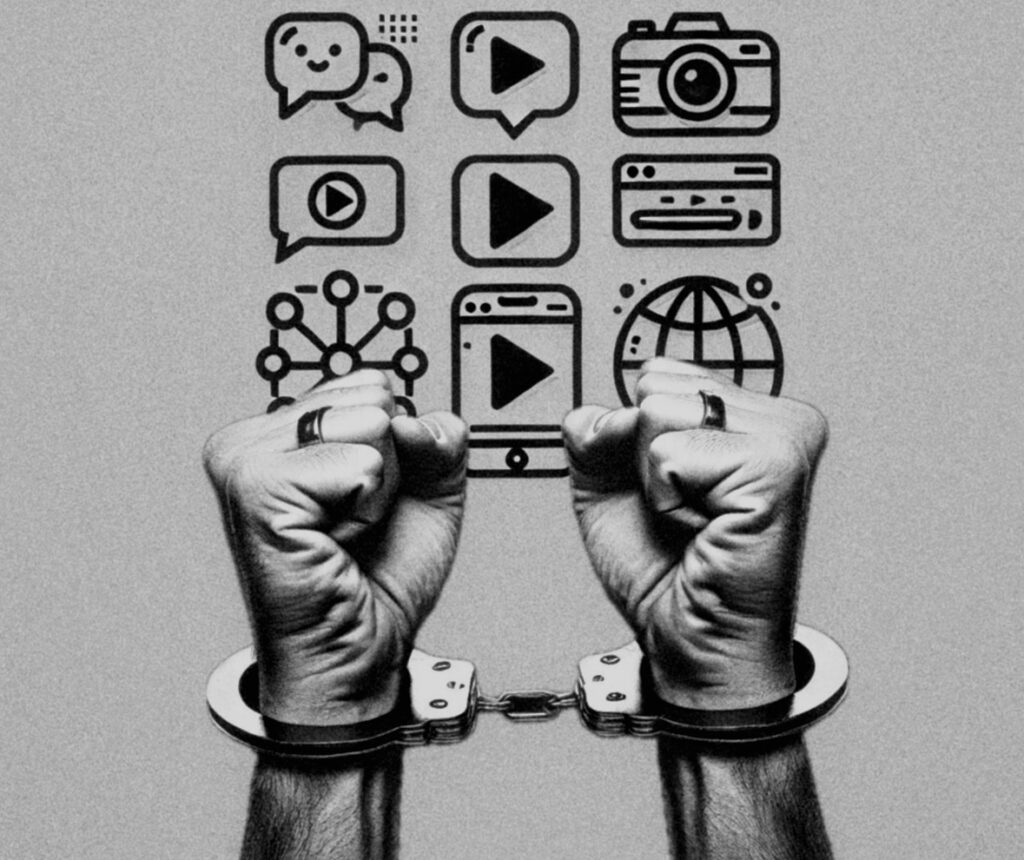
What if I were to tell you that you were being manipulated? But not by nation, political party, ideology, secret organization or lizard people– but by memes.
I recently installed Instagram for the first time. For a few weeks, I enjoyed a steady stream of musical and academic content. Then suddenly, my feed became flooded with politics. To my knowledge, I have never reposted or even liked any particularly political content; yet, whether it be the Israel-Hamas War, the Iranian protests, Charlie Kirk or Renee Good, every wild opinion under the sun came, unwelcomed, into my home page. What was particularly fascinating, though, was the form of this political commentary: memes
Much could (and has) been said about how social media has shaped modern American politics. In recent years, however, memes have become a mainstay in contemporary political culture. Memes are used both by and against political figures. To give one example, I have seen many memes that parody President Donald Trump, and Trump, especially during his second term, has taken to using memes as a political tool (CNN).
Most people do not seem to know that “meme” is a term originally coined by Richard Dawkins in his book “The Selfish Gene,” where he used the word to refer to ideas and concepts that travel through a culture via mimesis (that is, imitation). Though we now use the word to describe a form of humorous digital art, memes in that sense are still carriers of social information. Memes (silly images) are memes (symbols spread through mimesis).
Memes in their original meaning are a central theme of the video game “Metal Gear Solid 2: Sons of Liberty.” There are many parts of the game that are relevant for the modern political landscape (the predictive power of this 2001 video game is absolutely mind-boggling), but to focus on a specific scene: towards the end of the game, the AI antagonist explains its reasoning for controlling and censoring the internet: “But in the current, digitized world, trivial information is accumulating every second, preserved in all its triteness: never fading, always accessible. Rumors about petty issues, misinterpretations, slander: all this junk data, preserved in an unfiltered state, growing at an alarming rate.”
In “Metal Gear Rising: Revengeance,” which is both a narrative and philosophical sequel to “Sons of Liberty,” the villain Monsoon describes memes as “the DNA of the soul. They shape our will. They are the culture. They are everything we pass on. Expose someone to anger long enough, they will learn to hate. They become a carrier. Envy, greed, despair: all memes, all passed on.”
What both these monologues illustrate is the immense power and danger of memes. Memes are everywhere, and they shape us in ways that we do not fully comprehend. What makes modern internet memes even more insidious is that they are packaged up in culturally recognizable symbols. Memes thrive off of imitation; think about how often the same few images circulate (e.g., the “Predator” handshake or “distracted boyfriend”). Memes are passed on, retweeted, liked, reposted and repackaged on and on until they become icons. Then they become carriers of ideas, a sort of cultural Trojan horse; the exterior feels familiar and safe, but that says nothing about their contents. Even before we understand what exactly the meme is communicating, it has partially slipped past our mental guard because it is a familiar symbol.
In October 2025, the Department of Homeland Security posted a meme of the Master Chief (from the legendary “Halo” series of games) with the words, “Destroy the Flood. Join ICE.gov.” For those who don’t know, the Flood are a species of parasitic space zombies who are one of the primary antagonists in “Halo”. This meme became the source of much backlash, both because of how it seemed to compare illegal immigrants to the Flood, and because it took a cultural icon and twisted it for political ends (Forbes). Of course, the current administration are not the only ones to use memes for their political ends: I have seen a massive quantity of left-wing internet content calling for violence against ICE, police and those they disagree with. We have become comfortable with political violence, and no political party gets to claim the moral high ground right now. They are all guilty of using their influence to spread hatred. Monsoon was right: we have been exposed to anger for so long that we have learned to hate.
The ideas we pass on– our memes– are our legacy. Unfortunately, as “Sons of Liberty” predicted, the internet has become an unprecedented cesspool of junk data. Instead of a court of public opinion, we have created a landfill where what little wisdom that exists is buried under a mountain of “rumors of petty issues, misinterpretation, slander.” This is the internet. These are the memes that we have created, that have shaped us, and that we may pass on to later generations. This article has been largely negative, and I am sorry for that. Yet, I want to end with a note of hope. Memes are an inevitable part of any civilization; they are cultural DNA. They are dangerous, yes, but necessary and life-giving. We cannot live, love, or think without inheriting memes from those who came before us. To leave off with one final quote, this time from “Sons of Liberty’s” Solid Snake: “We’ve inherited freedom from all those who fought for it. We all have freedom to spread the word, even me…. Through speech, music, literature, and movies– what we’ve seen, heard, felt– anger, joy, and sorrow– these are the things I will pass on. That’s what I live for. We need to pass the torch, and let our children read our messy and sad history by its light. We have all the magic of the digital age to do that with.”
