
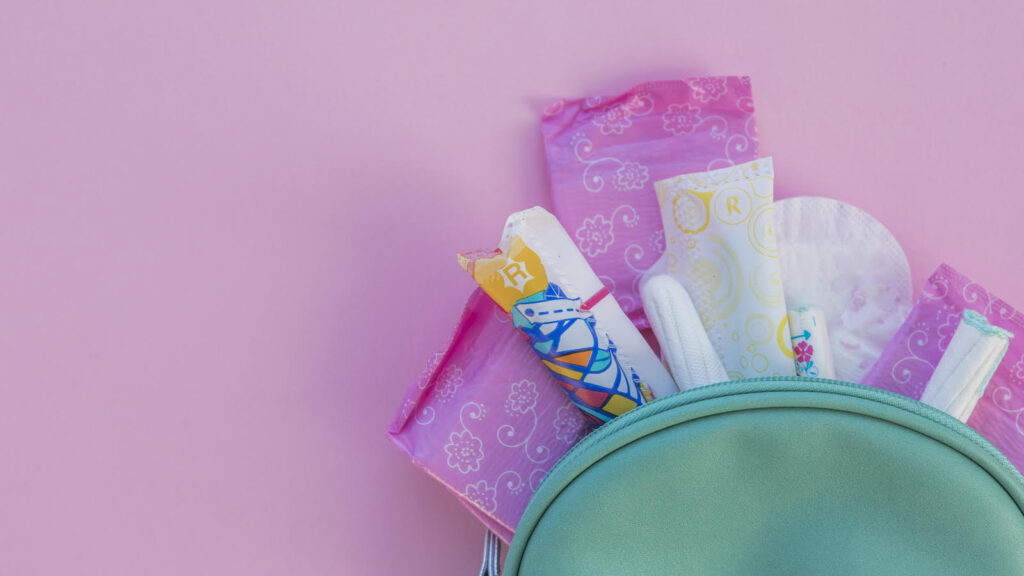
Are the menstrual products pervading the market safe for consumer use? In 2023, two lawsuits were filed against companies producing menstrual products, accusing the companies (Thinx and Carefree) of false advertising and unsafe ingredients. The two separate lawsuits specifically accused Thinx and Carefree of including PFAS in their products. The lawsuit was filed not simply because the products contained PFAS, but because Thinx and Carefree misleadingly advertised their products as “non-toxic” and “PFAS free.”
PFAS can be found in a lot of products, from food wrappers to cosmetics, and serve various purposes like water and stain resistance. However, PFAS have been linked to health risks: increased risk of kidney cancer, increased cholesterol levels, changes in liver enzymes, etc. Some of the health risks particularly relate to women, like increased risk of high blood pressure in pregnant people and decreases in infant birth weights. PFAS are colloquially termed “forever chemicals” because they do not break down over time, and instead accumulate, causing environmental as well as health problems. What’s more, forever chemicals soak into the skin pretty fast, making them particularly undesirable for menstrual products.
Following the various law suits, Graham Peasley and Alyssa Wicks of Notre Dame University conducted experiments to look for forever chemicals in menstrual products from a variety of brands, including Thinx and Carefree. Across the board, Peasley and Wicks found that half of the products contained PFAS – even if they advertised themselves as PFAS free – and one in eight contained so many PFAS that it indicates that the brands added forever chemicals intentionally. Peasley and Wicks found that Thinx products were not significantly worse than other brands. Almost none of the products contained no PFAS whatsoever.
For concerned consumers, Peasley and Wicks recommend tampons and silicon cups, which generally showed lower levels of PFAS. Period underwear and reusable pads are also generally safe, according to Peasley and Wicks, provided you wash thoroughly beforehand.
What about the pads and tampons provided in the bathrooms on Eastern’s campus? Are they safe from forever chemicals? The products in the Eastern bathrooms come from the company Aunt Flow. According to the Aunt Flow blog, Aunt Flow does not contain any forever chemicals. Moreover, Aunt Flow is certified FDA, certified OCS (Organic Content Standard), and certified OEKO-TEXT Standard 100. This means that third party sources help to confirm Aunt Flow products as safe and natural. Of course, consumers cannot know without 100% certainty that Aunt Flow products contain no forever chemicals, but given the information available to the general public, these menstrual products are on the safer side of the spectrum.
Seemingly, the conversation about forever chemicals in menstrual products has just begun. Scientists are still researching the pervasiveness of PFAS in menstrual products, as well as their exact effects on health and the environment. As consumers, we can only make our best effort, based on what we know so far, to use products that do not intentionally use PFAS and that have been certified as safer by third party sources.
