
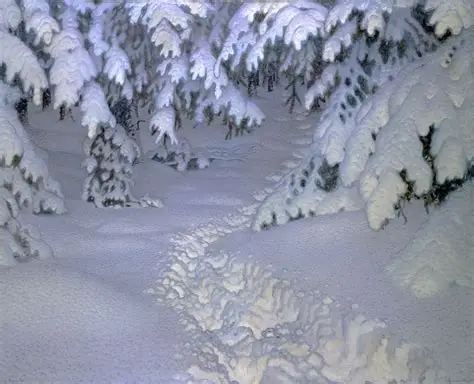
The onset of this new year has brought with it two things: bitter cold and piles of snow. Many people consider winter to be a tough season to grapple with. There is, however, a painter who grants us hope during these frigid months. His name is Gustaf Fjaestad. This prolific Swedish modernist introduced life into barren wastelands with his use of color and creativity.
Fjaestad was born in Sweden in 1868 and not much is known about his personal life before he began painting. He was 23 when he began studying at the Royal Academy of Fine Arts, where he stayed for one year. Following his time there, he continued his studies through the Academy of the Arts in Stockholm. Like many others during the turn of the century, Fjaestad began utilizing an exploratory technique. He is best known for his snowy landscape paintings, where he utilized colors across the spectrum to provide depth to his work. What is unique about Fjaestad is that he primed his canvases with light sensitive chemicals to capture the intricacies of the landscape. Along with using his own photographs for reference, he utilized impasto in his works, which added a subtle emphasis to the spirit of the snow. Fjaestad used shades of purple, yellow and pink within his paintings. These colors defied what people were familiar with when looking at a piece of art that was meant to depict such a relentless season. Fjaestad often collaborated with other artists to create these dreamlike scenes. He worked with Carl Larsson on fresco paintings for the Swedish National Museum and soon after would create with his wife, Maja Fjaestad.
Maja Fjaestad and Gustav Fjaestad were married in 1898, and they decided to move to Värmland county. There they formed Rackstad Artists’ Colony and lived among many artists that were also interested in revolutionizing the way that their pieces embodied nature. Gustav Fjaestad began woodworking and textile-weaving alongside his wife, who held an influential role in his artistic career. Maja Fjaestad even had her own textile weaving studio that she opened with Gustav Fjaestad’s sisters, Amelie Fjaestad and Anna Fjaestad. Together, Gustav Fjaestad and Maja Fjaestad inspired another in an artistic symbiosis. The amalgamation of their works is still highly respected among Sweden because of the pride it brings to the nation, alongside its significance to Swedish modernism.
When discussing the inspiration for his work Gustav Fjaestad wrote that, “winter does not present itself to me as a tyrannical monster but ruled by a pure and quiet spirit.” One painting of his that expresses this same spirit is “Silence — Winter (1914)”. When admiring the work, the viewer feels as if they are there. The depression of the path leads into the background of the piece and invites an attitude of adventure. The viewer feels the pull of the light and is immersed in the setting. Gustav Fjaestad’s use of light forces the eye to drift upwards to the fur branches that are weighed down by snow. There is a certain mystery hiding in this piece that I think many artists fail to present because Gustav Fjaestad relies upon the viewer’s sense of wonder to perceive the beauty that winter has to offer. Gustav Fjaestad’s incredible work serves as a testament to the mystery of winter’s “pure and quiet spirit,” and continues to inspire people around the world to contemplate their perception.
