
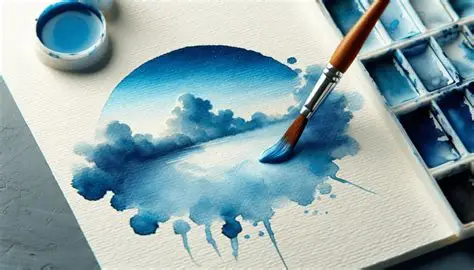
College students may be intimidated by the prospect of adopting a new hobby. A common perception is that art is abstract and not easily accessible to the general public. We’ve all said (or heard) at one point, “I can’t even draw a stick figure!” Regardless of this overwhelming sense of doubt, everyone is capable of exploring their artistic side. An incredible way to do this is through watercolor painting, which is a medium I started delving into during high school.
I was told by an art teacher during this time that watercolor is one of the most approachable mediums in the artistic world. I had a hard time believing this until I bought my first watercolor travel pack. I had been drawing avidly since sixth grade at that point, and was enthralled by the prospect of adding color and life to my pieces. I couldn’t have chosen a better hobby to pursue because watercolor painting has been a great love of mine since I first picked up a paintbrush. It allows for creative expression, all while challenging the traditional boundaries of drawing. Paint lays on the paper as a collection of shapes: it does not necessarily require strategy and calculation to paint, unless you want it to. Creativity and freedom are defining attributes of this medium. For those who are new to art, here is what I have learned about watercolor painting and how to best approach it as a beginner.
First, it is important to buy paper that is “heavy” enough. This language sounds strange when referencing paper, but there are different “weights” that types of paper have. You will need to buy watercolor paper, because it is “weighted” in order to support the layering of paint. Watercolor paper ranges from lightweight to heavy-weight. Light-weight paper is standard at 90 lb. This type of paper needs to be taped down with painters’ tape to avoid “warping,” which is when the paper begins to fold in on itself from the repeated application of water in one area. In my opinion, the best paper to use has a weight somewhere within a 120-190 lb. range. A fantastic brand to start with to ensure good paper quality is Strathmore 140lb watercolor paper. As you progress in your hobby, you can test out different weights and see what works best for your personal style!
Next, you buy the actual paint. Watercolor comes in many forms, including cakes, tubes, pencils and more. Trying to find the right kind of paint can be a bit overwhelming, but it really depends upon your personal preference. What I would recommend is buying a travel-sized watercolor cake set. This type of paint comes in little plastic containers that sit inside a foldable, conveniently sized case. As a beginner, mixing colors and color theory may be challenging, so I would recommend getting a watercolor travel kit that has colors you’ll know you want to paint with. That way, you don’t need to worry about mixing. Watercolor travel kits are also perfect for dorm life, because you can fold them away and put them in your desk until further use. A wonderful and decently priced product is the Sakura koi watercolor travel kit, which includes 30 paint cakes. Just add a bit of water, and you’re good to go.
The brushes are my favorite part. In my experience, you only need four brushes: two rounds, and two flats. Round brushes account for detail, with their precision tips and large reservoirs for water towards the base of the bristle. Flat brushes are great for more rigid line work, and washing the canvas in water.
When preparing your space for a session of watercolor painting, you’ll need a cup of water (NOT a cup you plan on drinking from in the future!), as well as a few paper towels. Ensure sufficient lighting when you plan to paint.
Here are some tips for your first painting:
- Always focus on the lights first. When you paint with watercolor, you cannot layer lighter colors over top of dark colors. Use light as a core element in your piece.
- Wash the piece with white watercolor paint before you begin. This is done by using a flat brush and painting the entire background white. This facilitates easier blending and brightens the piece. Give it enough time to dry between the first and second layer!
- Have fun with it. Try many different techniques and step out of your comfort zone. It will be so rewarding to see your progress as you continue on with your hobby!
If you have any questions at all, find me on campus. I’d love to talk more with you about painting. I’ve been doing it for years now and am not professionally trained, but it is a passion of mine. Best of luck and happy painting!
